Products
1550nm Narrow-Linewidth Coaxial Pigtailed DFB Laser
  • 1550nm Narrow-Linewidth Coaxial Pigtailed DFB Laser1550nm Narrow-Linewidth Coaxial Pigtailed DFB Laser
  • 1550nm Narrow-Linewidth Coaxial Pigtailed DFB Laser1550nm Narrow-Linewidth Coaxial Pigtailed DFB Laser
  • 1550nm Narrow-Linewidth Coaxial Pigtailed DFB Laser1550nm Narrow-Linewidth Coaxial Pigtailed DFB Laser
  • 1550nm Narrow-Linewidth Coaxial Pigtailed DFB Laser1550nm Narrow-Linewidth Coaxial Pigtailed DFB Laser

1550nm Narrow-Linewidth Coaxial Pigtailed DFB Laser

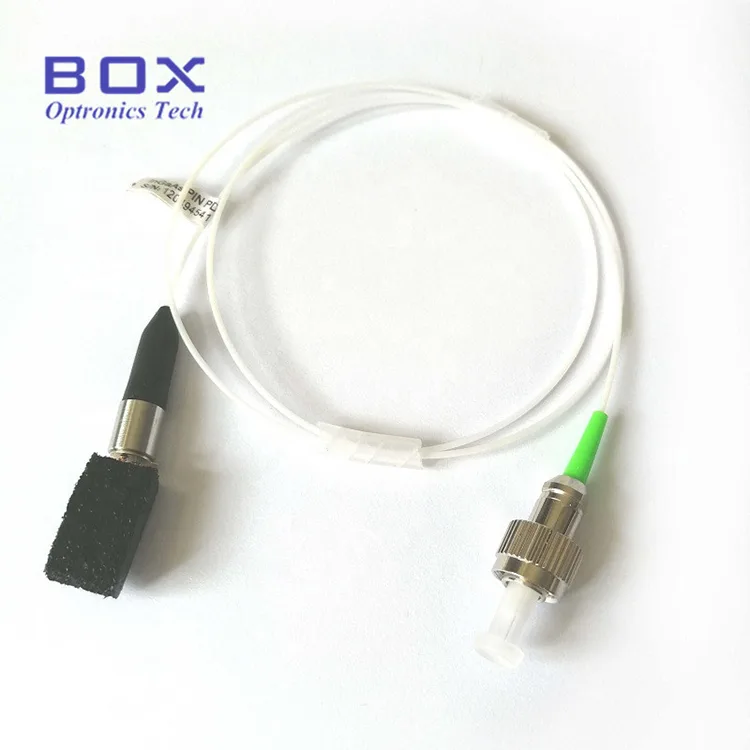
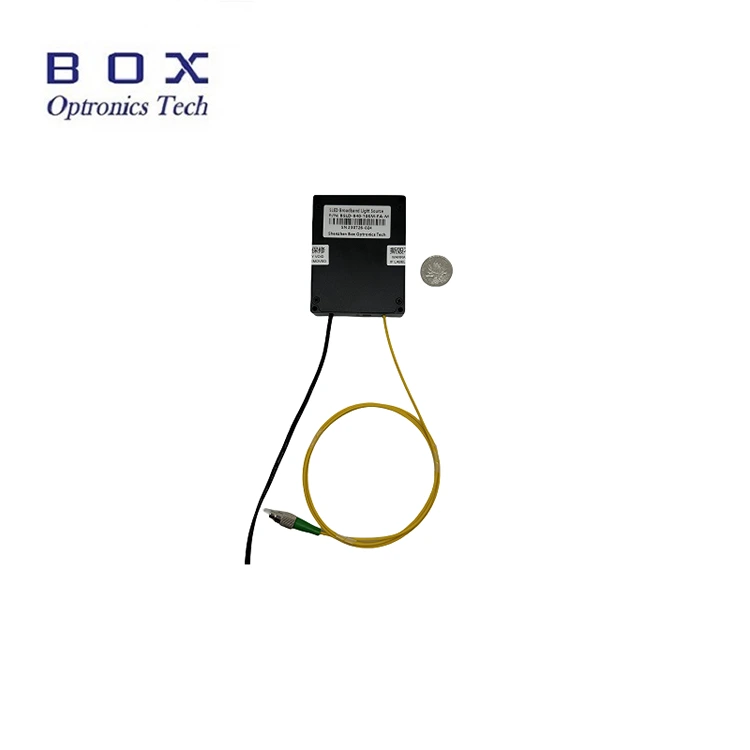
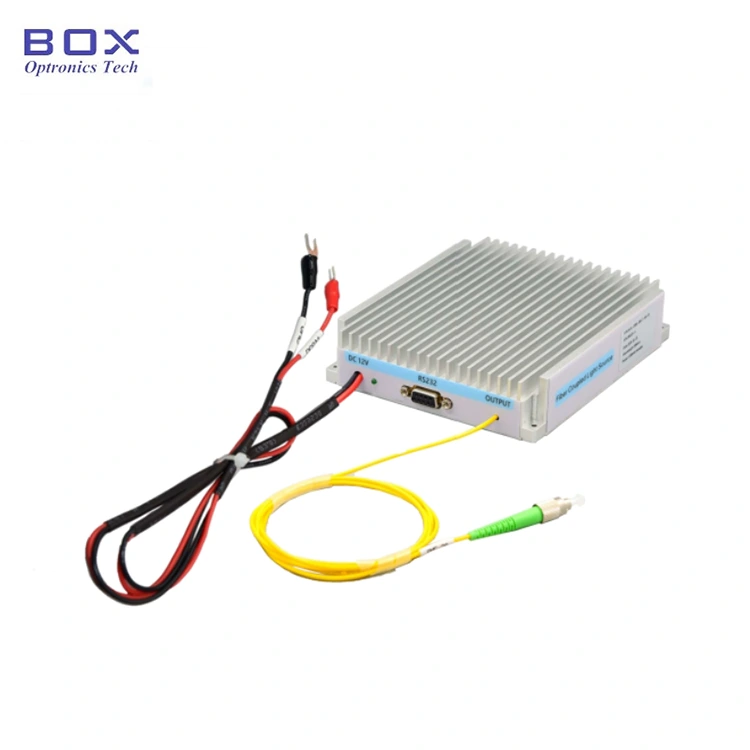
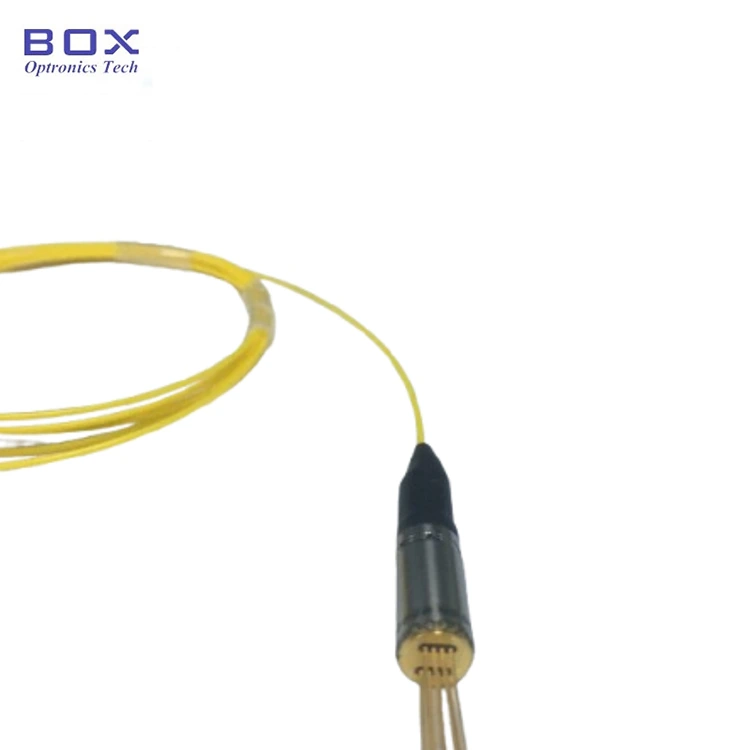
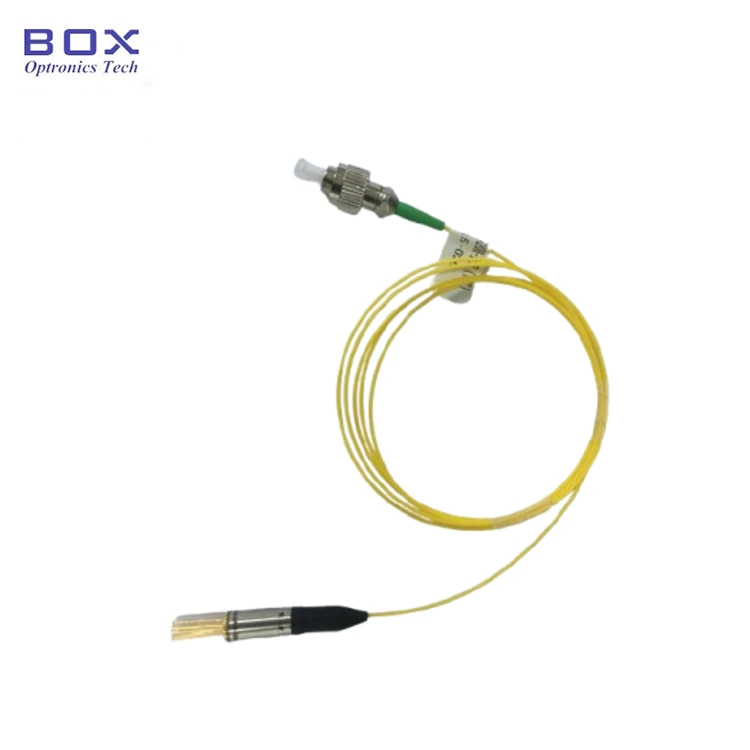
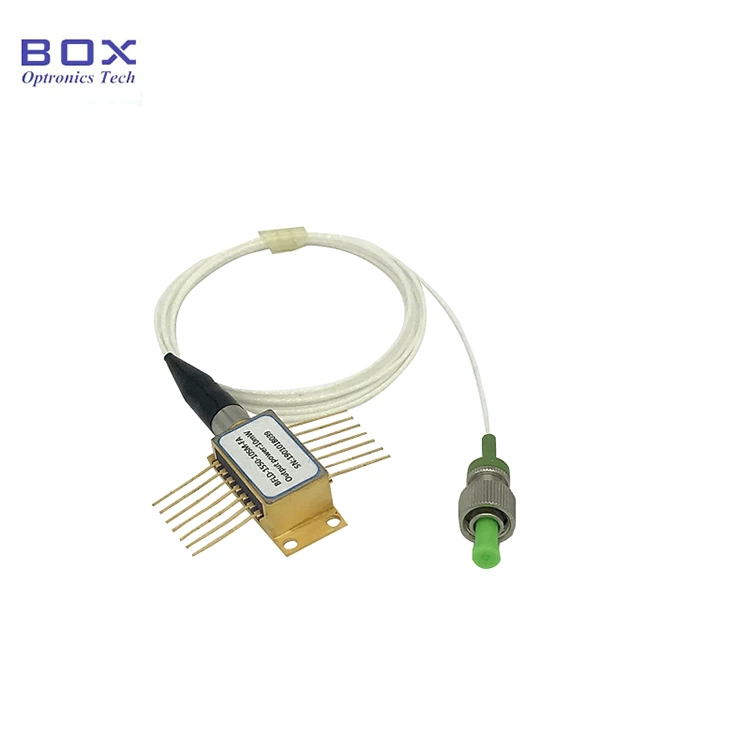
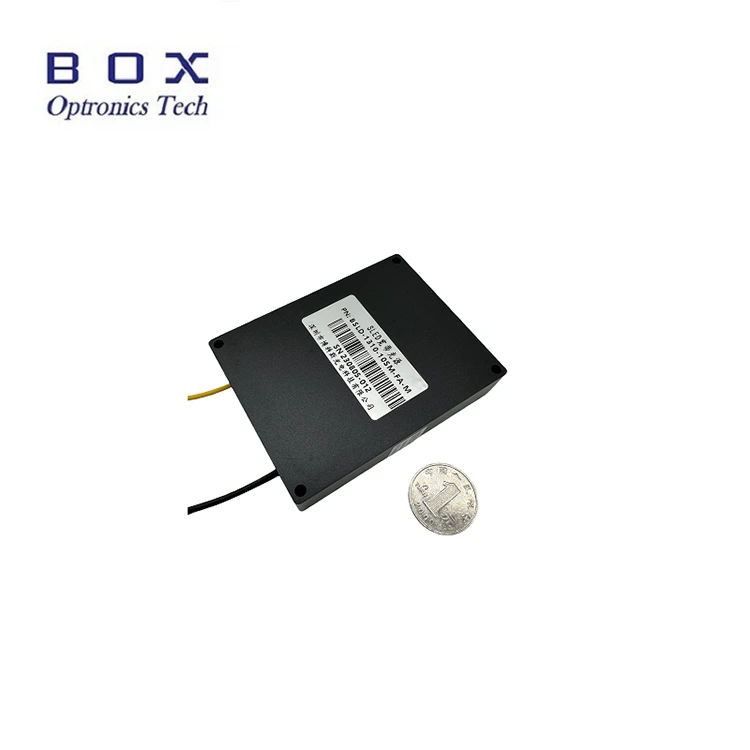
Box Optronics, a professional optoelectronic component manufacturer, provides the 1550nm Narrow-Linewidth Coaxial Pigtailed DFB Laser, a TEC-cooled DFB laser designed for coherent LiDAR, ranging systems, and advanced optical sensing applications. Featuring a center wavelength of 1550nm, a narrow spectral linewidth of < 500 kHz measured by the self-heterodyne method, and 2 mW minimum optical output power through single-mode fiber.
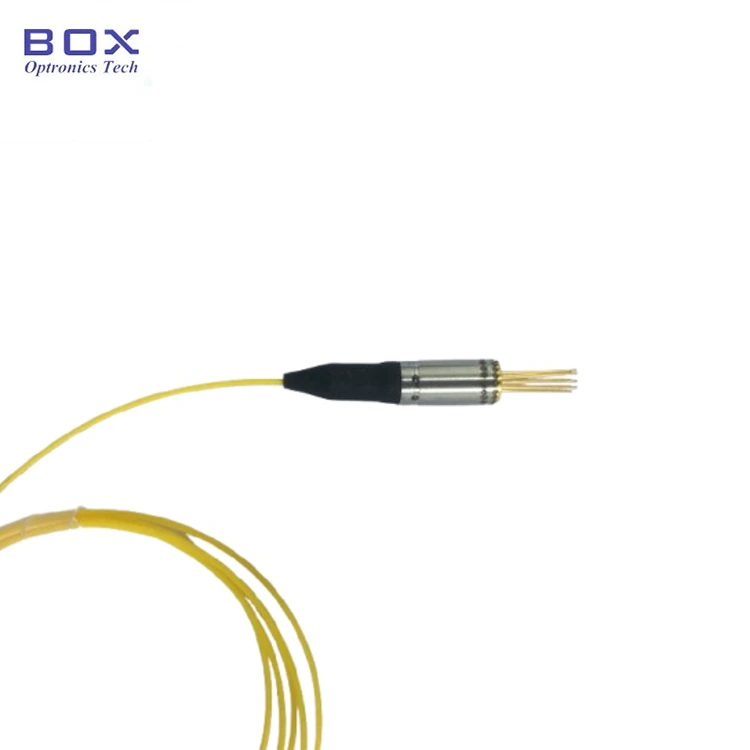
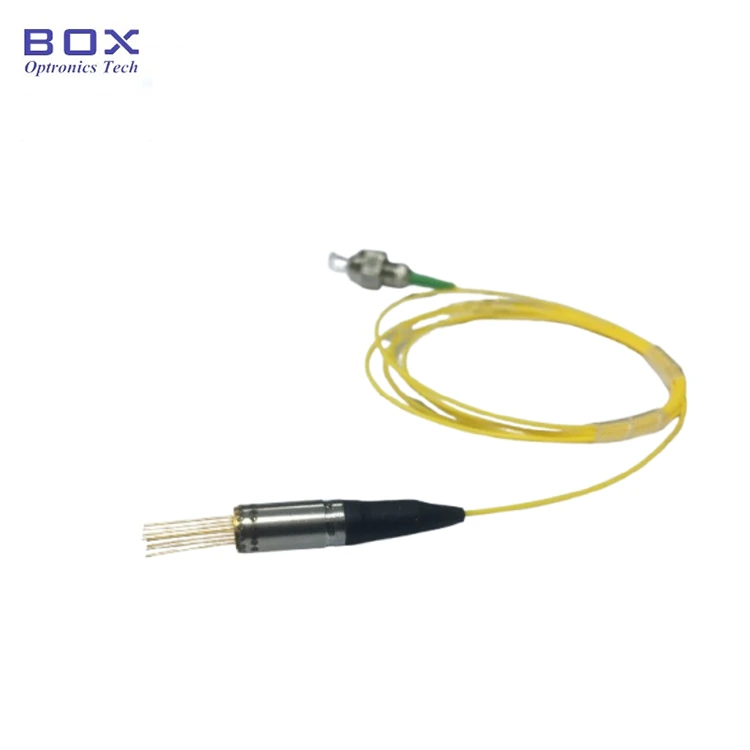
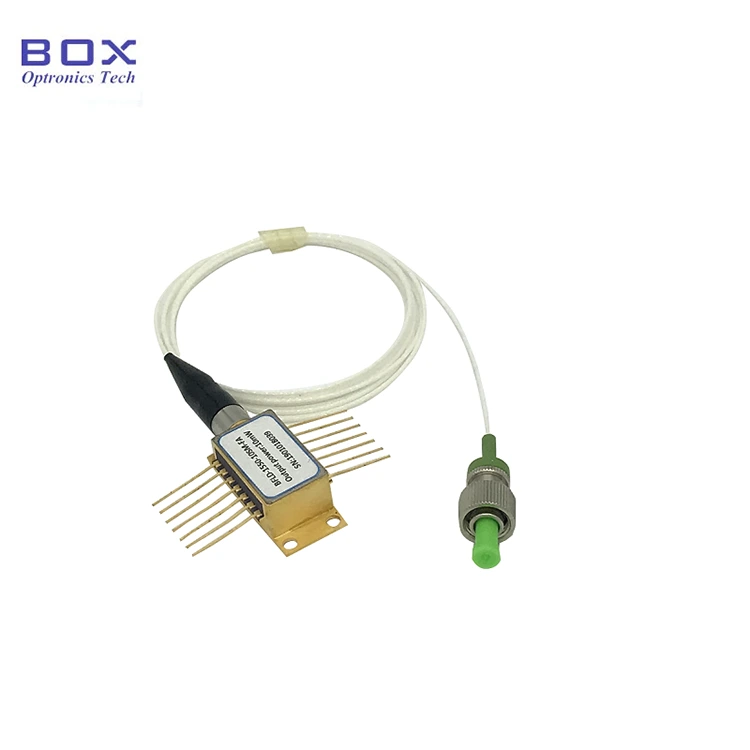
Housed in a compact coaxial package with integrated thermoelectric cooler (TEC), thermistor, built-in InGaAs PIN monitor photodiode, and optical isolator, the 1550nm Narrow-Linewidth Coaxial Pigtailed DFB Laser provides stable wavelength operation and low-noise optical output for coherent LiDAR systems.

Product Overview-1550nm Narrow-Linewidth Coaxial Pigtailed DFB Laser

The 1550nm Narrow-Linewidth Coaxial Pigtailed DFB Laser from Box Optronics is a TEC-cooled distributed feedback laser designed for LiDAR ranging systems and autonomous driving applications. Operating at a center wavelength of 1550nm, it provides ≥2mW optical output through single-mode fiber and a spectral linewidth of ≤500kHz, measured using the self-heterodyne method. The laser integrates a thermoelectric cooler (TEC), thermistor, InGaAs PIN monitor photodiode, and optical isolator in a compact coaxial package with an FC/APC or SC/APCfiber pigtail.

Key Features -1550nm Narrow-Linewidth Coaxial Pigtailed DFB Laser

· Center wavelength: 1550nm, +/-3nm WL tolerance

· Narrow spectral linewidth: ≤500kHz (self-heterodyne measurement method)

· Optical output power: 2mW minimum (SM fiber output)

· Built-in optical isolator: ≥30dB isolation

· Integrated thermoelectric cooler (TEC) and thermistor

· Built-in InGaAs PIN monitor photodiode

· Low noise, low distortion operation

· High reliability and long operating life

Typical Applications -1550nm Narrow-Linewidth Coaxial Pigtailed DFB Laser

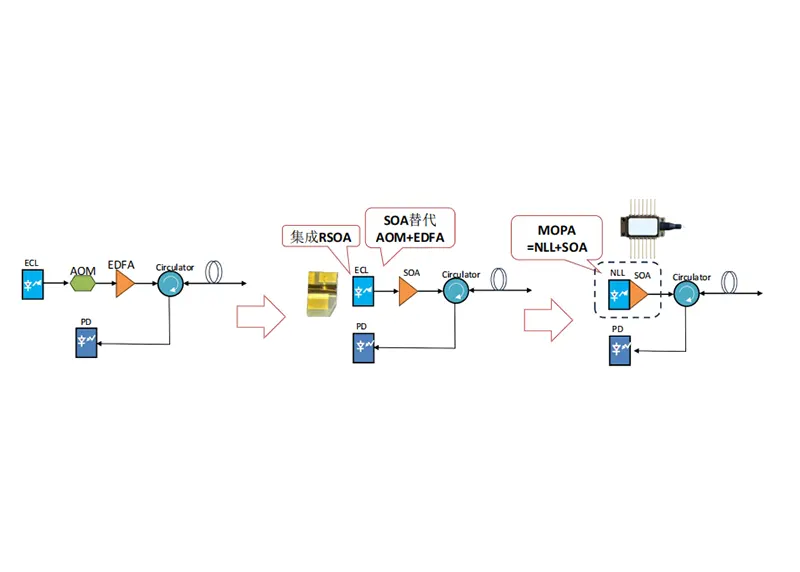
· FMCW LiDAR systems for autonomous driving and ADAS

· Coherent LiDAR for simultaneous range and velocity measurement

· LiDAR systems for 3D imaging and autonomous navigation

· Industrial LiDAR systems for robotics, AGV navigation, and automation

· Coherent optical communication test systems and optical measurement equipment

· Distributed fiber optic sensing systems

· Optical frequency domain reflectometry (OFDR)

· Photonics research and laboratory coherent detection experiments

· OEM integration into LiDAR modules, automotive sensors, and industrial sensing equipment

Product Specifications -1550nm Narrow-Linewidth Coaxial Pigtailed DFB Laser

Absolute Maximum Ratings (Tc = 25°C)

Parameter

Symbol

Rating

Unit

LD Direct Forward Current

IFL

400

mA

LD Reverse Voltage

VRL

2

V

PD Forward Current

IFD

2

mA

PD Reverse Voltage

VRD

15

V

Operating Case Temperature

TOP

-40 ~ +85

°C

Storage Temperature

TST

-40 ~ +85

°C

Lead Soldering (Temperature/Time)

-

260 / 10

°C / Sec

Fiber Bend Radius

-

60

mm


Optical-Electrical Characteristics (Tc = 25°C)

Parameter

Symbol

Test Condition

Min.

Typ.

Max.

Unit

Output Optical Power (SMF)

PO

IOP=ITH+20mA

2

-

-

mW

Threshold Current

ITH

CW

-

50

-

mA

Forward Voltage

VF

CW

-

-

3

V

Center Wavelength

λC

IOP=ITH+20mA

1547

1550

1553

nm

Rise/Fall Time

Tr/Tf

IOP=ITH, 20%-80%

-

0.1

0.15

ns

Monitor Current

IM

IOP=ITH+20mA

100

-

1000

μA

Monitor Dark Current

ID

VRP=5V, DC

-

-

100

nA

Spectral Linewidth (Self-heterodyne)

Δv

CW, PO=PF

-

-

500

kHz

Slope Efficiency

SE

CW, IOP=ITH+20mA

0.1

-

-

W/A

Tracking Error

TE

CW, IM=Constant

-1.5

-

1.5

dB

Side-Mode Suppression Ratio

SMSR

CW, IOP=ITH+20mA

30

35

-

dB

Optical Isolation

ISO

-

30

-

-

dB


TEC and Thermistor Characteristics

Parameter

Symbol

Min.

Typ.

Max.

Unit

TEC Maximum Power

QMAX

-

-

0.6

W

TEC Maximum Current

IMAX

-

-

0.9

A

TEC Maximum Voltage

VMAX

-

-

1.2

V

TEC Capacity (ΔT)

ΔT

-

40

-

K

Thermistor Resistance

RTH

-

9.9

-

kΩ

Package and Pin Definition

Package Type: Coaxial Hermetic Package with TEC

Built-in Components: Optical isolator, thermoelectric cooler (TEC), thermistor, InGaAs PIN monitor photodiode


Ordering Information -1550nm Narrow-Linewidth Coaxial Pigtailed DFB Laser

Model Nomenclature

BLD - X XX XX X - X XX (XX)

Example: BLD-ND5502H-IFA(TEC)

Field

Code

Description

Product Type

BLD

Box Laser Diode Series

LD Type

ND

ND = Narrow Linewidth DFB

Wavelength

55

55 = 1550nm

Output Power

02

02 = 2mW

Pin-Out

H

H = Type H pin configuration

Isolator

I

I = With optical isolator

Connector Type

FA / SA

FA = FC/APC; SA = SC/APC

TEC

(TEC)

Built-in thermoelectric cooler

Datasheet -1550nm Narrow-Linewidth Coaxial Pigtailed DFB Laser

Datasheet

Frequently Asked Questions (FAQ)

Q: What does "narrow linewidth" mean and why is it important for LiDAR?

A: Spectral linewidthrefers the width of the laser's optical frequency spectrum. This laser provides a linewidth of < 500 kHz, measured by the self-heterodyne method. A narrower linewidth generally results in a longer coherence length, which is important for coherent detection techniques such as FMCW LiDAR.


In FMCW LiDAR systems, the transmitted and reflected optical signals interfere to generate a beat signal used for range and velocity measurement. A narrow-linewidth laser helps maintain coherence, reduce phase noise, and improve measurement sensitivity in long-range and high-resolution applications.

Q: What is the difference between this coaxial narrow-linewidth laser and a butterfly-packaged DFB laser?

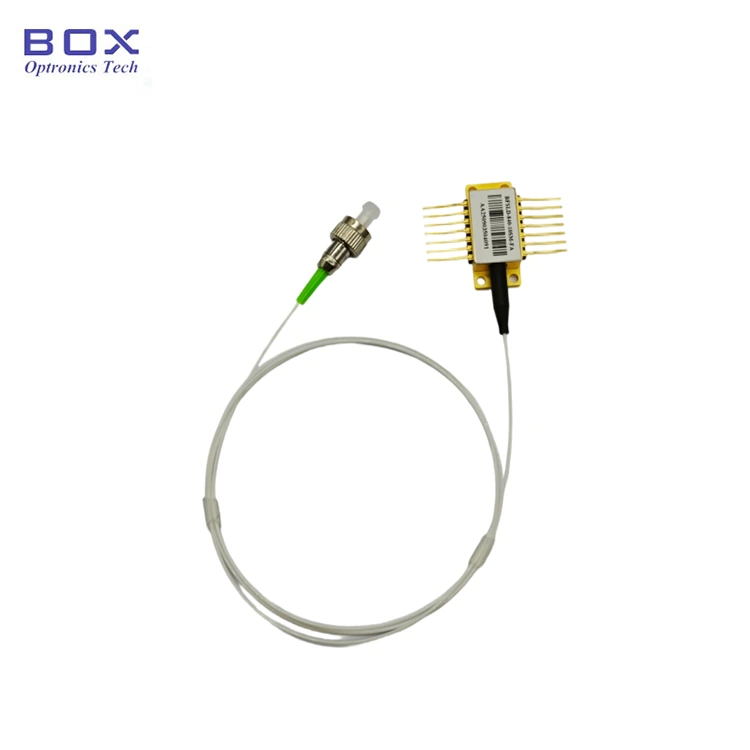
A: The primary difference is the package form factor. This product uses a compact coaxial package with integrated TEC, thermistor, monitor photodiode, and optical isolator, making it suitable for space-constrained LiDAR modules and fiber-coupled OEM integration.

Butterfly-packaged DFB lasers typically provide more electrical interfaces and higher flexibility for laboratory systems, telecom equipment, and applications requiring customized thermal or electrical designs.

The suitable package depends on the system requirements, including size, thermal management, electrical interface, and integration method.

Q: Is the 1550nm wavelength eye-safe for automotive LiDAR?

A: The 1550nm wavelength region is generally considered more eye-safe for LiDAR applications compared with shorter wavelengths such as 905nm. At around 1550nm, absorption by the eye's anterior structures significantly reduces retinal exposure, allowing LiDAR systems to achieve higher allowable optical power levels under applicable laser safety standards.

The final eye-safety classification depends on the complete system design, including output power, beam divergence, modulation format, exposure duration, and compliance with standards such as IEC 60825.

Q: What is the minimum order quantity (MOQ)?

A: The MOQ is2pcs.

Related Products -1550nm Narrow-Linewidth Coaxial Pigtailed DFB Laser

· 1550nm DFB 100KHz BTF Narrow Linewidth Laser

· 1310nm DFB 100KHz BTF Narrow Linewidth Laser

· 1mm Active Area InGaAs PIN photodiode

· 1550nm SLD Broadband Light Source Micro-Module

· 1064nm 20kHz Ultra-Narrow Linewidth Fiber Laser


Bookmark this page for easy future reference.

Send Inquiry
Contact Info
  • Address

    Room 901, Building A, Rongchao New Era Plaza, No. 3 Lanqing 1st Road, Luhu Community, Guanhu Subdistrict, Longhua District, Shenzhen, 518110, China

Looking for competitive pricing on bulk orders? Send an inquiry to Box Optronics for high-performance DFB lasers, SLEDs, and PM fiber devices. Get a professional price quotation within 24 hours.
X
We use cookies to offer you a better browsing experience, analyze site traffic and personalize content. By using this site, you agree to our use of cookies. Privacy Policy
RejectAccept