Products
1582nm DFB Laser for H2S Gas Sensing
  • 1582nm DFB Laser for H2S Gas Sensing1582nm DFB Laser for H2S Gas Sensing
  • 1582nm DFB Laser for H2S Gas Sensing1582nm DFB Laser for H2S Gas Sensing
  • 1582nm DFB Laser for H2S Gas Sensing1582nm DFB Laser for H2S Gas Sensing

1582nm DFB Laser for H2S Gas Sensing

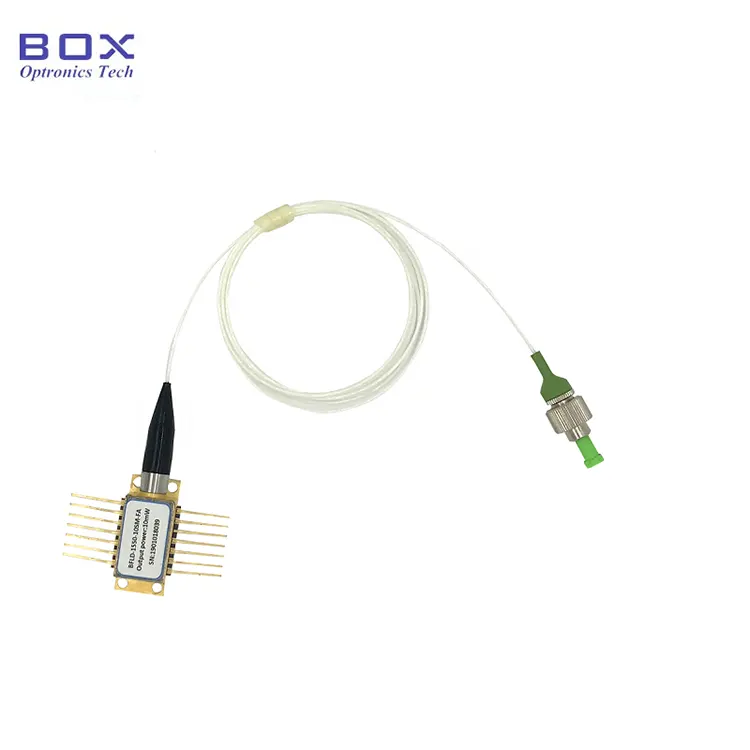
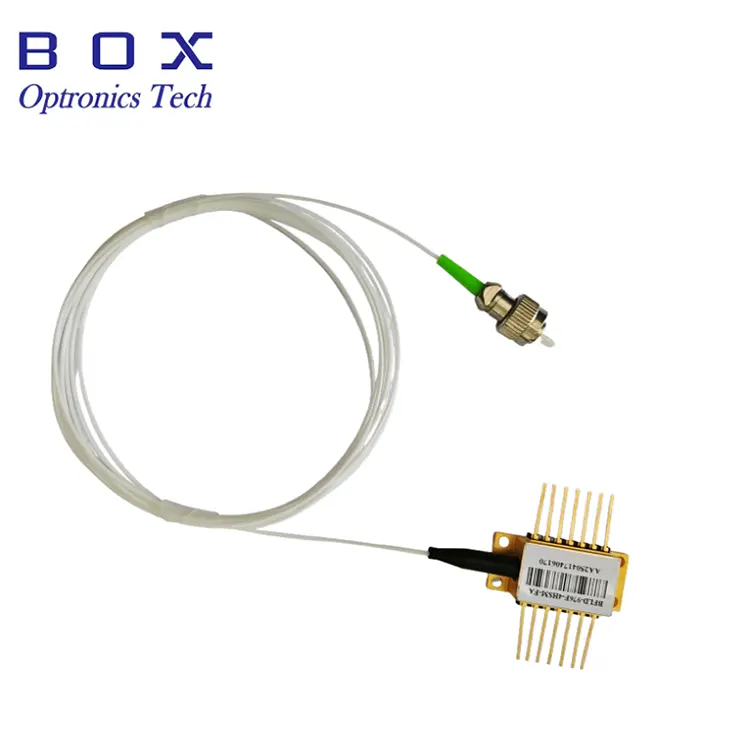
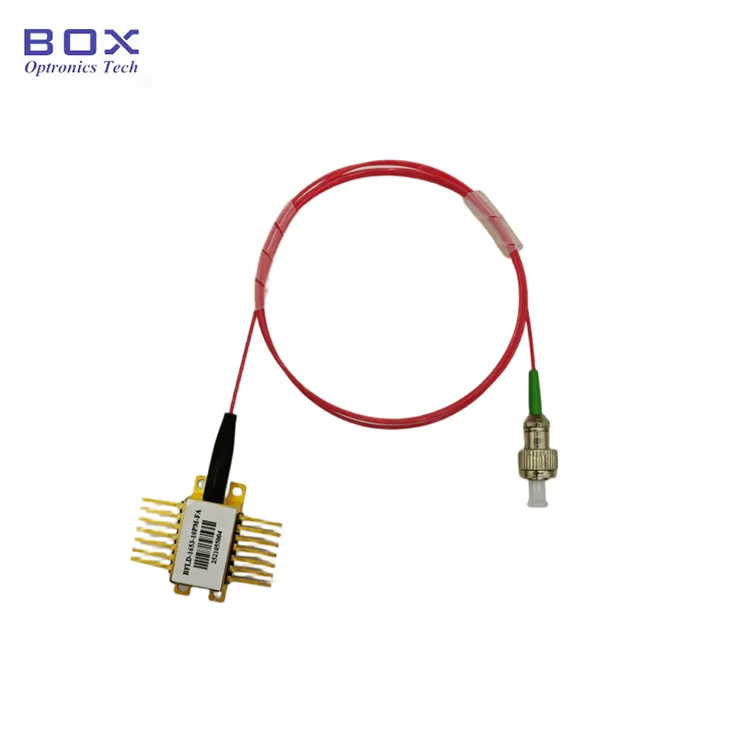
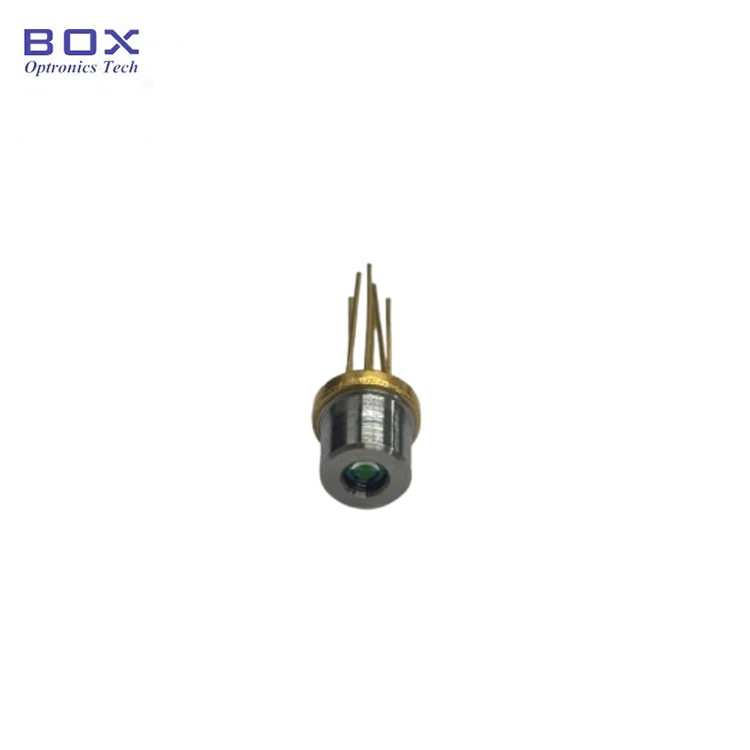
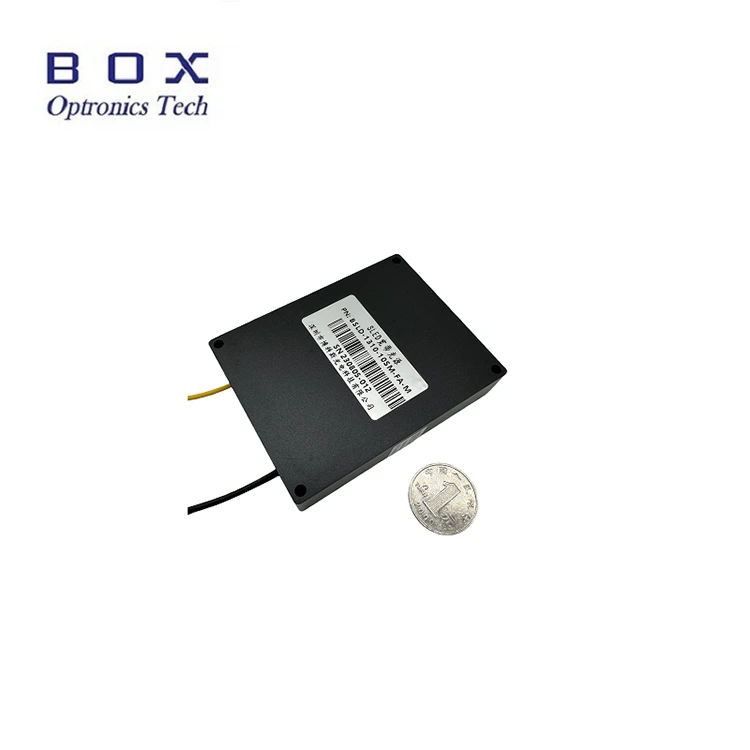
Box Optronics offers a 1582nm+/-1nm distributed feedback laser designed for hydrogen sulfide (H2S) detection using tunable diode laser absorption spectroscopy (TDLAS). The 1582nm DFB Laser for H2S Gas Sensing is housed in an industry-standard 14-pin butterfly package with an integrated thermoelectric cooler (TEC), 10kΩ thermistor, monitor photodiode, and built-in optical isolator, the 1582nm DFB laser provides wavelength stability (0.09nm/°C temperature coefficient, 0.01nm/mA current coefficient) and reliable operation across wide case temperature range.

Product Overview   - 1582nm DFB Laser for H2S Gas Sensing

The 1582nm DFB Laser for H2S Gas Sensing from Box Optronics is a high-performance MQW distributed-feedback laser designed for hydrogen sulfide (H₂S) detection and fiber optic sensing. The wavelength accuracy is +/-1nm, the wavelength range is 1581–1583nm , and it delivers 10mW minimum optical output power through SM or PM fiber. The integrated TEC and 10kΩ thermistor support wavelength stabilization, while the 0.01nm/mA wavelength current coefficient enables fine wavelength tuning. A ≥30dB optical isolator reduces back-reflections, and the 14-pin butterfly package with two pinout options provides flexible system integration.

Key Features   - 1582nm DFB Laser for H2S Gas Sensing

· Center wavelength: 1582nm , +/-1nm WL tolerance (range 1581–1583nm )

· High optical output power: 10mW / 20mW

· High side-mode suppression ratio: ≥35dB minimum, 40dB typical (CW)

· Built-in optical isolator: ≥30dB isolation

· Integrated thermoelectric cooler (TEC) and 10kΩ thermistor for wavelength stabilization

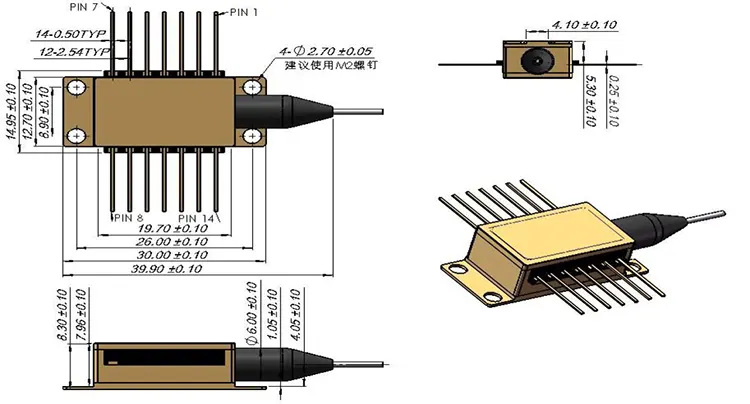
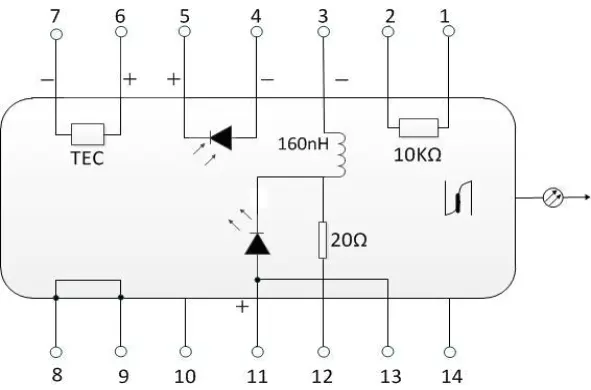
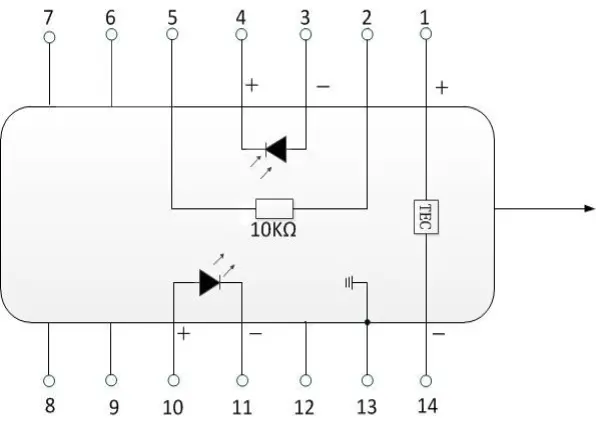
· Industry-standard 14-pin butterfly package, Type 1 and Type 2 pinout options

·  SM fiber or PM fiber pigtail

Typical Applications   - 1582nm DFB Laser for H2S Gas Sensing

· Hydrogen sulfide (H2S) gas detection and monitoring using TDLAS

· Wavelength modulation spectroscopy (WMS) for H2S detection

· Industrial H₂S safety and environmental monitoring

· Oil & gas, chemical, and wastewater gas analysis

· Process gas monitoring and emissions analysis

· NIR spectroscopy and gas analytical instruments

· OEM integration into H₂S gas analyzers and industrial safety systems

Product Specifications   - 1582nm DFB Laser for H2S Gas Sensing

Absolute Maximum Ratings

Parameter

Symbol

Condition

Min.

Typ.

Max.

Unit

Storage Temperature

Ts

-

-40

-

85

°C

Operating Case Temperature

Top

-

-20

-

70

°C

Forward Current

IF

CW

-

-

200

mA

Laser Reverse Voltage

VLR

-

-

-

2

V

PD Forward Current

IFPD

-

-

1.1

5

mA

PD Reverse Voltage

VRPD

-

-

5

10

V

TEC Current

ITEC

-

-

0.8

1.5

A

TEC Voltage

VTEC

-

-

1.5

3.5

V


Electro-Optical Characteristics (T = 25°C Laser Temperature)

Parameter

Symbol

Test Condition

Min.

Typ.

Max.

Unit

Center Wavelength

λc

TL=15~35°C, CW

1581

1582

1583

nm

Optical Output Power

PO

-

10

-

-

mW

Threshold Current

ITH

-

-

10

35

mA

Slope Efficiency

η

CW, PO=5mW

0.05

0.11

0.2

mW/mA

Operating Current

Iop

PO=10mW, CW

-

100

120

mA

Spectral Linewidth

LW

FWHM

-

3

-

MHz

Laser Forward Voltage

VF

CW, PO=10mW

-

1.2

3.0

V

Monitor Dark Current

ID

-

-

-

0.1

μA

Bandwidth (-3dB)

BW

-

-

2.5

-

GHz

Side-Mode Suppression Ratio

SMSR

CW

35

40

-

dB

Optical Isolation

-

-10<TC<+70°C

30

-

-

dB

Relative Intensity Noise

RIN

CW, PO=5mW

-

-145

-

dB/Hz

TEC Set Temperature

Ts

-

15

-

35

°C

Input Impedance

ZIN

-

22

25

28

Ω

Thermistor Current

ITC

-

10

-

100

μA

Thermistor Resistance

RTH

TL=25°C

9.5

10

10.5

kΩ

TEC Current

ITEC

TL=25°C, TC=70°C

-

-

1.5

A

TEC Voltage

VTEC

TL=25°C, TC=70°C

-

-

3.5

V

TEC Capacity

ΔT

Tc=70°C

-

-

50

°C

Wavelength Drift (EOL)

Δλ

25-year lifetime

-

-

±0.1

nm

Wavelength Temperature Coefficient

Δλ/ΔT

TEC 15°C to 35°C

-

0.09

-

nm/°C

Wavelength Current Coefficient

Δλ/ΔI

-

-

0.01

-

nm/mA


Package and Pin Definition   - 1582nm DFB Laser for H2S Gas Sensing


Type 1 Pin Configuration


Pin

Description

Pin

Description

1

Thermistor

14

NC (No Connection)

2

Thermistor

13

Laser Anode (+)

3

Laser DC Bias (Cathode) (-)

12

Laser RF Cathode (-)

4

PD Monitor Anode (-)

11

Laser Anode (+)

5

PD Monitor Cathode (+)

10

NC (No Connection)

6

TEC (+)

9

Case Ground

7

TEC (-)

8

Case Ground


Type 2 Pin Configuration


Pin

Description

Pin

Description

1

TEC (+)

14

TEC (-)

2

Thermistor

13

Case Ground

3

PD Monitor Anode (-)

12

NC (No Connection)

4

PD Monitor Cathode (+)

11

Laser Cathode (-)

5

Thermistor

10

Laser Anode (+)

6

NC (No Connection)

9

NC (No Connection)

7

NC (No Connection)

8

NC (No Connection)

Ordering Information   - 1582nm DFB Laser for H2S Gas Sensing

Model Nomenclature

BFLD - XXXX - XX - XX - XX (-X)

Example: BFLD-1582-10SM-FA


Field

Code

Description

Laser Type

BFLD

DFB Laser Diode Series

Wavelength

1582

1582nm (also available: 1310, 1550, CWDM, other wavelengths)

Output Power

10

10mW (also available: 20mW, customized)

Fiber Type

SM / PM

SM = Single-mode (SMF-28e); PM = Polarization-maintaining

Connector Type

FA / SA

FA = FC/APC; SA = SC/APC; Other connectors available

Pinout

NULL / 2

NULL = Type 1 (default); 2 = Type 2

Datasheet and Testsheet   - 1582nm DFB Laser for H2S Gas Sensing

datasheet

testsheet

Frequently Asked Questions (FAQ)

Q: Why is 1582nm suitable for H₂S gas sensing?

A: The 1582nm wavelength region contains H₂S absorption features and has been demonstrated for trace H₂S detection using DFB lasers and TDLAS/QEPAS techniques. In TDLAS, the laser wavelength is scanned across the target absorption line, and the resulting absorption is analyzed to determine H₂S concentration. The 1582nm region is also compatible with standard fiber-optic components and mature DFB laser technology. A narrow linewidth and high SMSR enable precise wavelength control for spectroscopic detection.

Q: Why is a built-in optical isolator important for gas sensing systems?

A: Back-reflections from fiber connectors, gas cells, beam splitters, and other optical components can cause optical feedback, leading to output power fluctuations, mode instability, and wavelength instability. A built-in optical isolator with ≥30dB isolation suppresses optical feedback and helps maintain stable laser operation and measurement baselines. Its effectiveness is particularly valuable in fiber-based TDLAS systems with significant optical reflections.

Q: What is the minimum order quantity (MOQ)?

A: The MOQ is 1pc. Small quantities are available for R&D, prototyping, and initial evaluation, while larger volumes can be supported for gas analyzer production and OEM programs. Contact our sales team for pricing based on your required quantity.

Q: Can I get a custom wavelength for a different gas species?

A: Yes. Box Optronics offers DFB lasers at various wavelengths matched to gas absorption features for TDLAS and other spectroscopic applications. Available wavelengths include solutions for H₂S, CO₂, CH₄, H₂O, CO, NH₃, O₂, and other gases. Contact us with your target gas and wavelength requirements for a feasibility review and quotation.

Related Products

· 1574nm DFB Laser Diode for CO2 Sensing

· 760nm 10mW DFB Butterfly Laser Diode

· 1392nm 10mW DFB Butterfly Laser Diode

· 1mm Active Area InGaAs PIN photodiode

Send Inquiry
Contact Info
  • Address

    Room 901, Building A, Rongchao New Era Plaza, No. 3 Lanqing 1st Road, Luhu Community, Guanhu Subdistrict, Longhua District, Shenzhen, 518110, China

Looking for competitive pricing on bulk orders? Send an inquiry to Box Optronics for high-performance DFB lasers, SLEDs, and PM fiber devices. Get a professional price quotation within 24 hours.
X
We use cookies to offer you a better browsing experience, analyze site traffic and personalize content. By using this site, you agree to our use of cookies. Privacy Policy
RejectAccept