Products
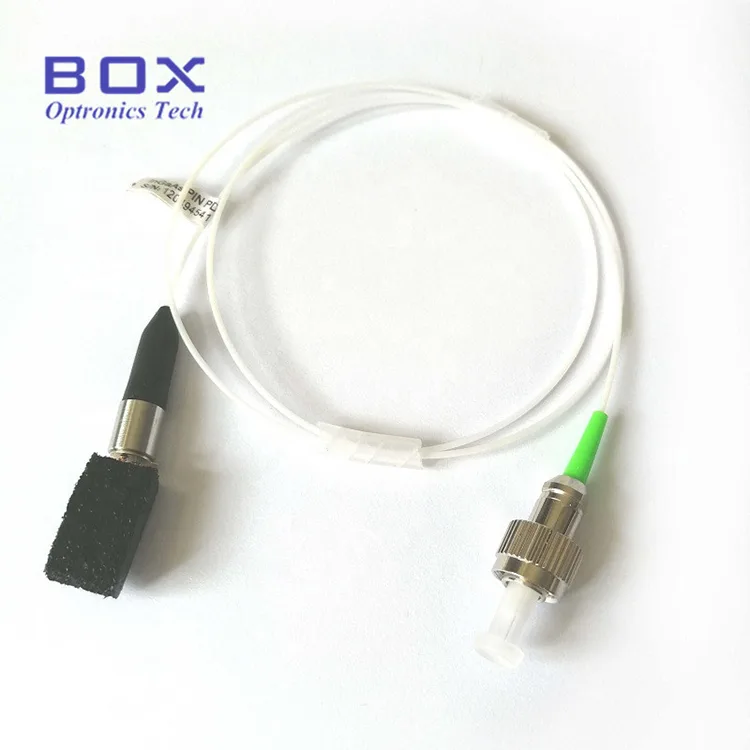
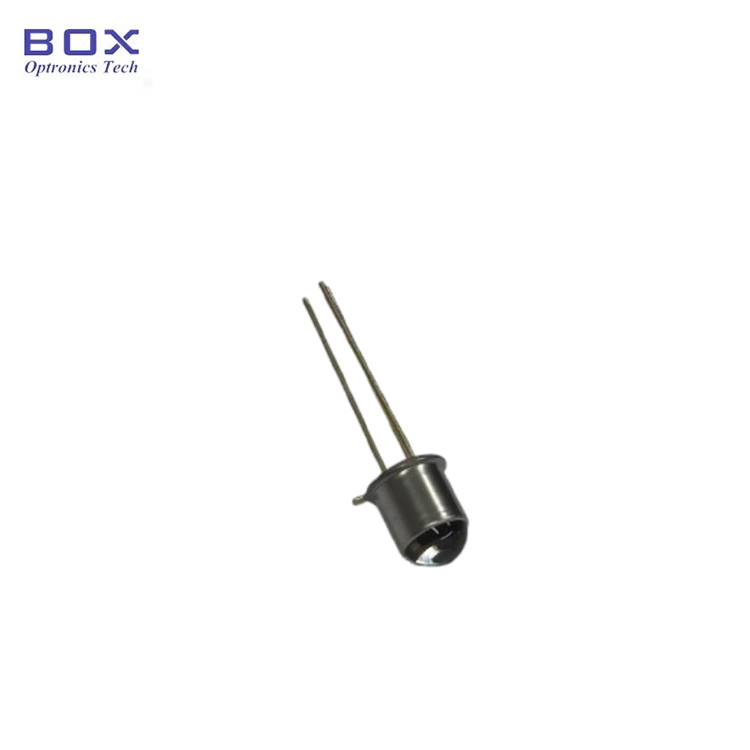
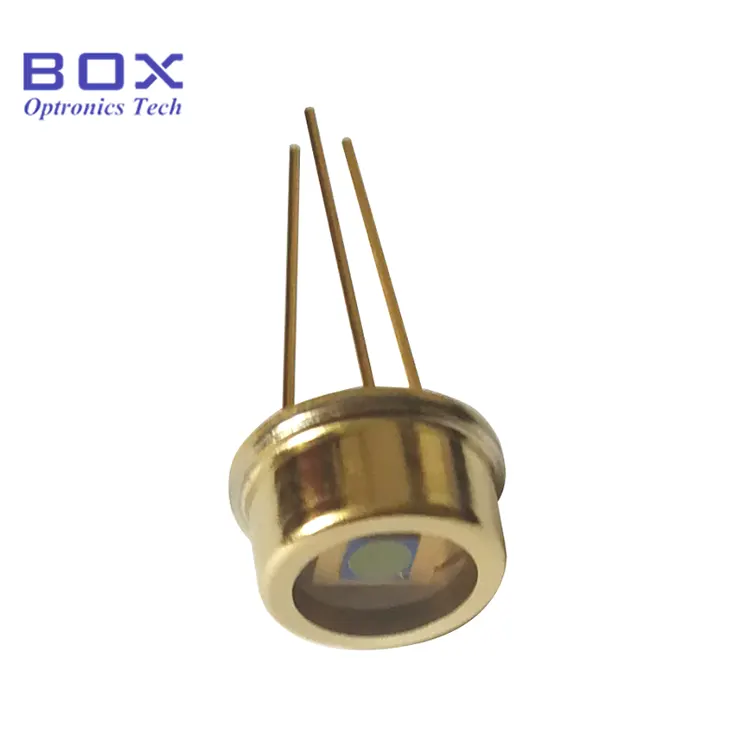
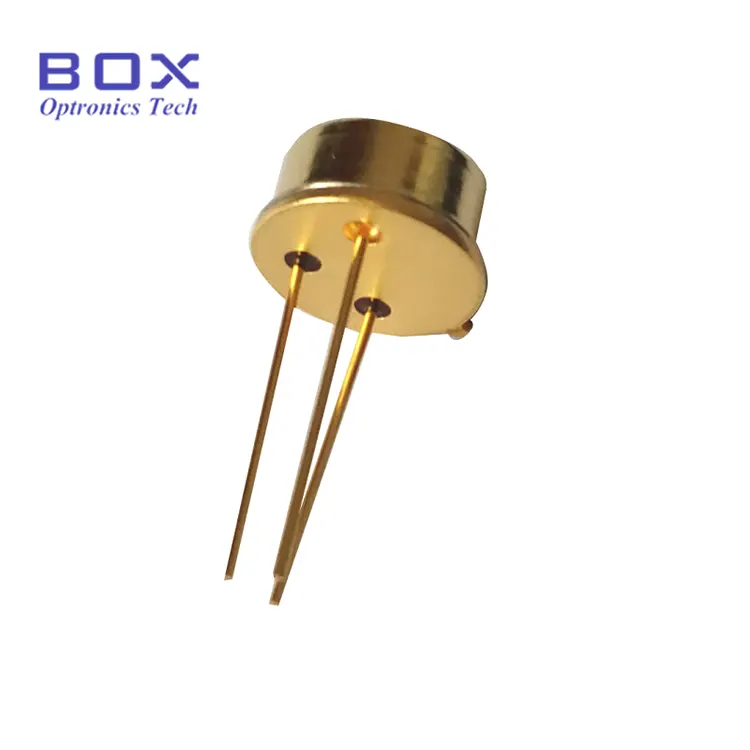
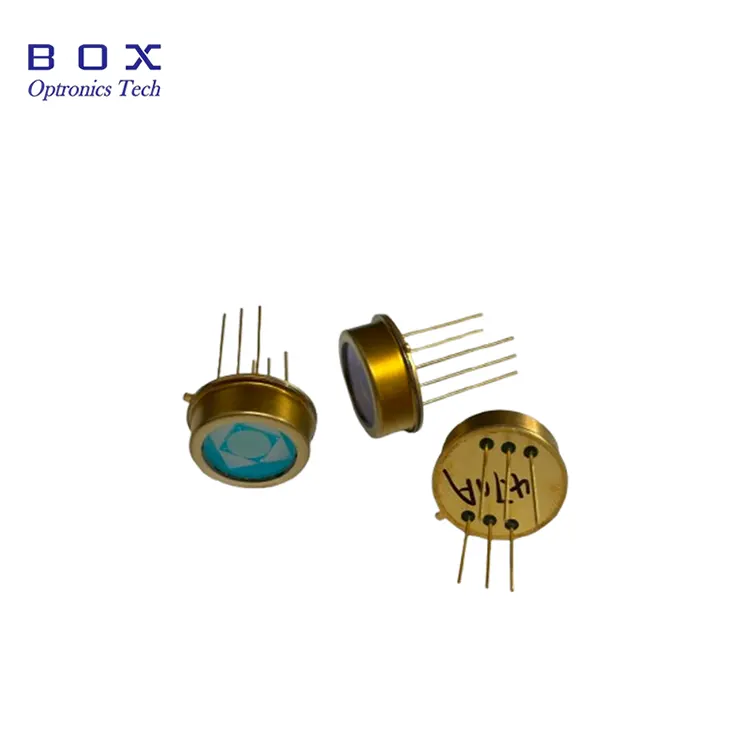
Coaxial Pigtailed InGaAs PIN Photodiode Detector
  • Coaxial Pigtailed InGaAs PIN Photodiode DetectorCoaxial Pigtailed InGaAs PIN Photodiode Detector
  • Coaxial Pigtailed InGaAs PIN Photodiode DetectorCoaxial Pigtailed InGaAs PIN Photodiode Detector
  • Coaxial Pigtailed InGaAs PIN Photodiode DetectorCoaxial Pigtailed InGaAs PIN Photodiode Detector

Coaxial Pigtailed InGaAs PIN Photodiode Detector

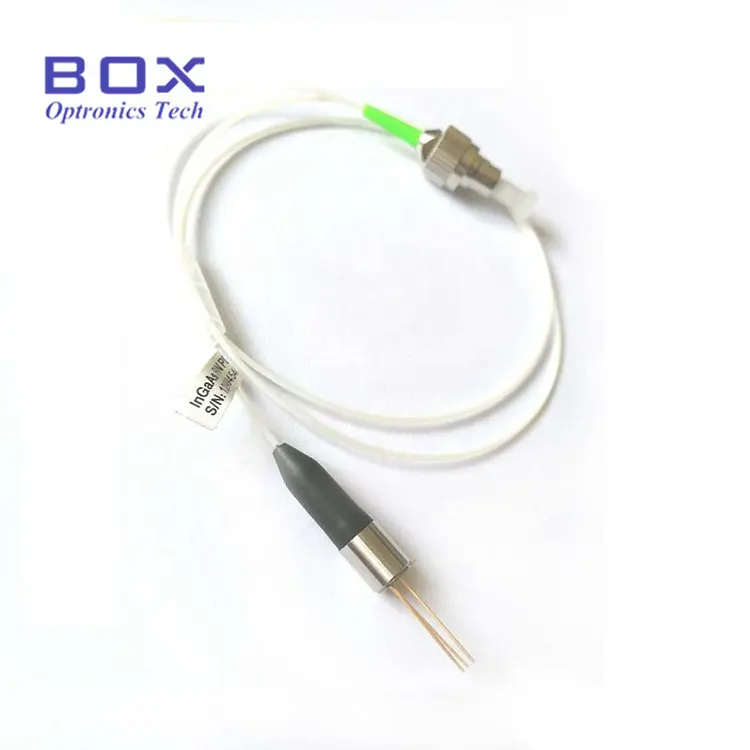
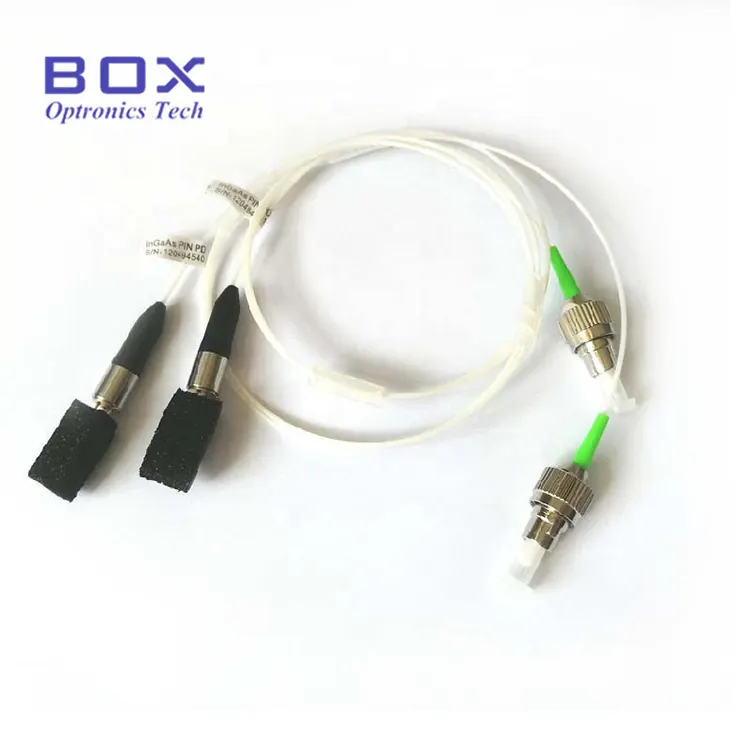
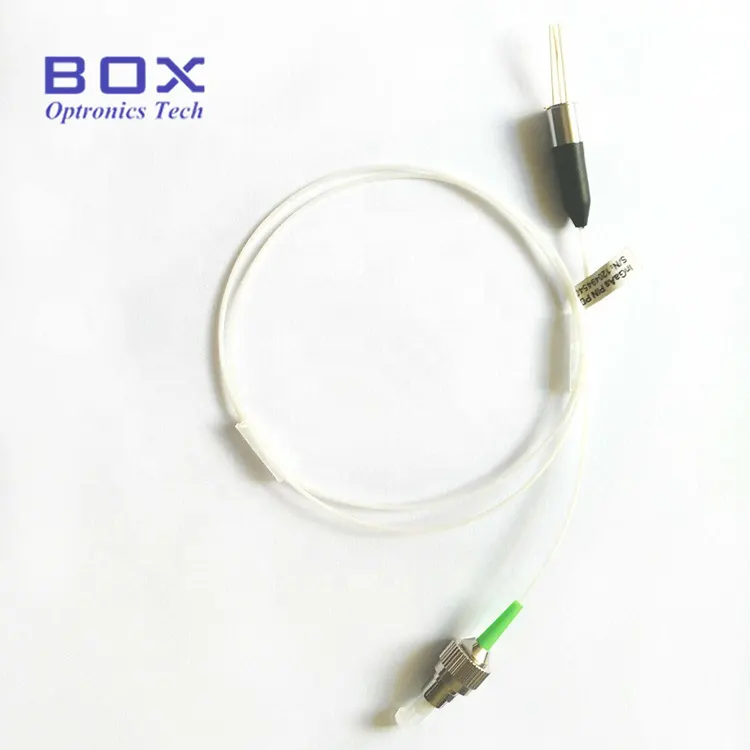
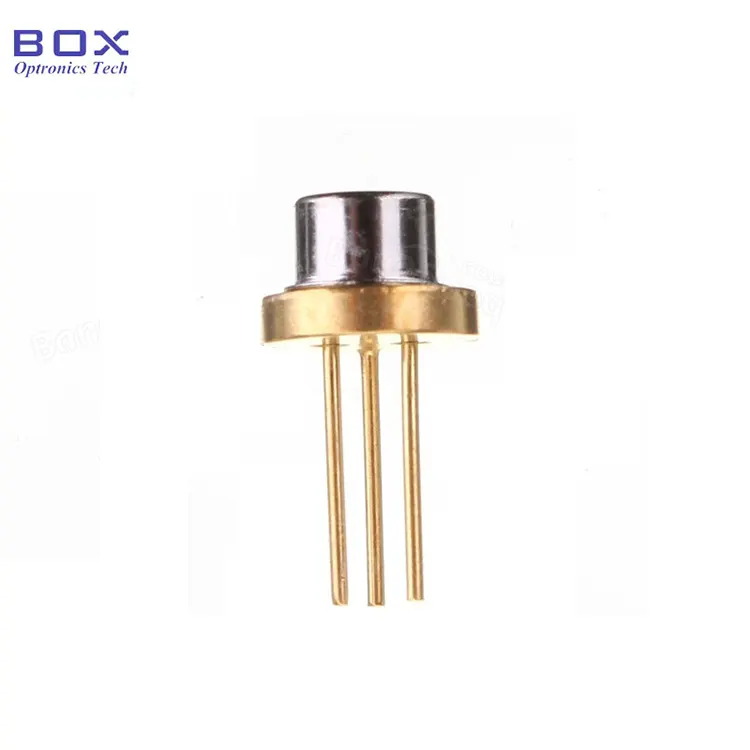
Box Optronics is an optoelectronic component manufacturer and supplier providing optical detectors for fiber-optic communication, CATV, sensing, and test & measurement applications. The Coaxial Pigtailed InGaAs PIN Photodiode Detector (BPD Series) is designed for high-speed analog optical detection and receiver applications. It features a hermetic coaxial package with a fiber pigtail for direct optical connection, while configurable fiber, connector, package, and pinout options support different OEM integration requirements.

Product Overview   - Coaxial Pigtailed InGaAs PIN Photodiode Detector

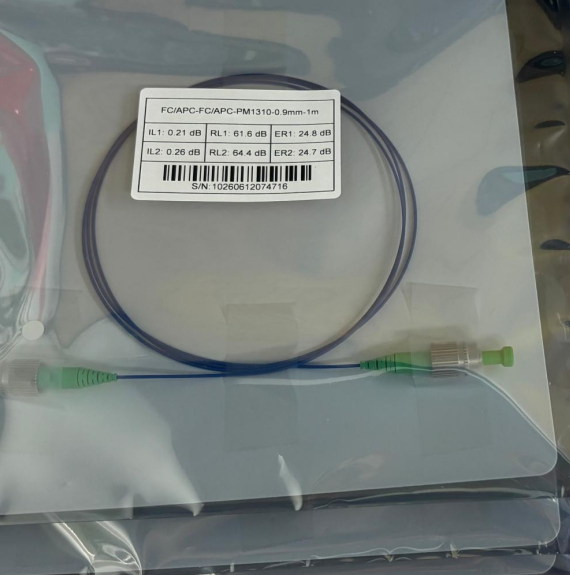
The Coaxial Pigtailed InGaAs PIN Photodiode Detector is an optical detector with a spectral response range of 1100-1650nm. It provides high responsivity at commonly used 1310nm and 1550nm wavelengths and is designed for fiber-optic communication, CATV, sensing, and test & measurement applications. The BPD-70P10B-FA features a 70um active area and a 1-meter fiber pigtail with an FC/APC connector, and is available from stock. Other active-area, package, fiber, connector, and pinout configurations are customized for OEM integration.

Key Features   - Coaxial Pigtailed InGaAs PIN Photodiode Detector

· Wide spectral response range: 1100nm to 1650nm

· High responsivity , low dark current , and low junction capacitance

· Wide bandwidth: 2.5GHz

· Fast rise/fall time: 0.3ns

· Pigtailed fiber output with FC/APC or other connector (receptacle option also available)

Typical Applications   - Coaxial Pigtailed InGaAs PIN Photodiode Detector

· Analog optical receivers for CATV & fiber -optic video transmission

· Broadband RF-over-fiber detection systems

· Optical test and measurement instrumentation, including OTDR signal detection

· Distributed fiber-optic sensing, such as distributed acoustic sensing (DAS)

· Optical power monitoring in EDFA, DWDM and laser systems

· Photonics laboratory research and OEM system integration

Product Specifications   - Coaxial Pigtailed InGaAs PIN Photodiode Detector

Absolute Maximum Ratings (TC = 25°C)

Parameter

Symbol

Condition

Rating

Unit

Saturation Optical Power

PS

CW

5

mW

Forward Current

IF

CW

10 (typ)

mA

Reverse Voltage

VRPD

CW

30

V

Reverse Current

IRPD

CW

5

mA

Operating Temperature

TOP

-

-40 ~ +85

°C

Storage Temperature

TS

-

-40 ~ +85

°C


Optical-Electrical Characteristics (TC = 25°C)

Parameter

Symbol

Test Condition

Min.

Typ.

Max.

Unit

Wavelength Range

λ

-

1100

-

1650

nm

Responsivity @ 1310nm

R

Vr=5V, λ=1310nm

0.85

0.90

-

A/W

Responsivity @ 1550nm

R

Vr=5V, λ=1550nm

0.90

0.95

-

A/W

Dark Current

ID

Vr=5V

-

0.2

0.5

nA

Junction Capacitance

C

Vr=5V, f=1MHz, case open

-

0.6

0.75

pF

Rise Time / Fall Time

TR/TF

Vr=5V, 10~90%

-

-

0.3

ns

Bandwidth (-3dB)

BW

Vr=5V, 50Ω load, lead length=6mm, case open

2.5

-

-

GHz

Composite Second Order Beat

CSO

-

-

-70

-

dB

Composite Third Order Beat

CTB

-

-

-80

-

dB

Operating Voltage

V

-

-

-5

-

V

Optical Return Loss

ORL

λ=1310nm

-

45

-

dB

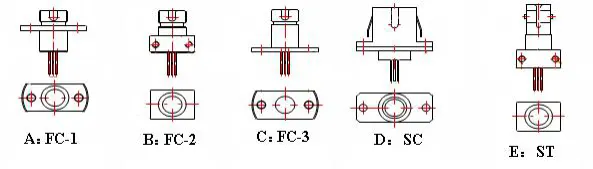
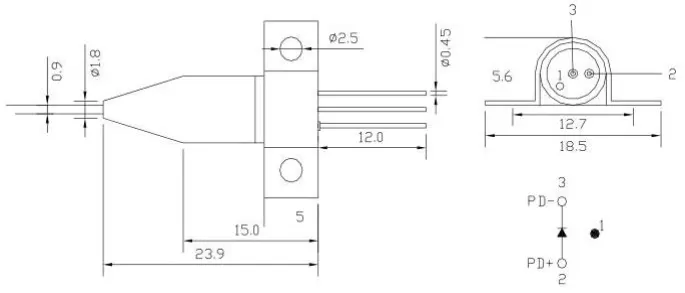
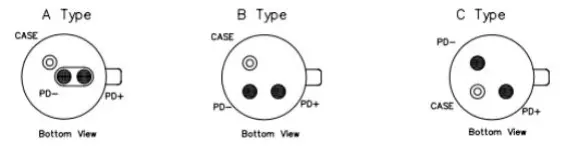
Package and Pin Definition   - Coaxial Pigtailed InGaAs PIN Photodiode Detector


Ordering Information   - Coaxial Pigtailed InGaAs PIN Photodiode Detector

Model Nomenclature

BPD - XX X XX X - XX -   ( X   )

Example: BPD-70P10B-FA ( 70m active area, Pigtailed type, 1.0m fiber, Type B pinout, FC/APC connector)

Field

Code

Description

Product Series

BPD

Box Photodiode Series

Active Area

55 / 70 / 3H / Other

55 = φ55μm; 70 = φ70μm; 3H = φ300μm; Other = custom

PD Type

P / R

P = Pigtailed type; R = Receptacle type

Fiber Length

05 / 10 / Other

05 = 0.5m; 10 = 1.0m; Other = custom length

Pinout

A / B / C / Null

A = Type A; B = Type B; C = Type C

Connector

FA / SA / FC / SC / ST / Other

FA = FC/APC; SA = SC/APC;

FC = FC-1; SC = SC-1; ST = ST; Other = custom

Material

Null / C / M / P

Null = default; C = ceramic; M = metal; P = plastic


Note: Pigtail length and fixed-card format can be customized. The product structure, size, optical parameters, and process technology requirements can be designed according to customer requirements.

Datasheet   - Coaxial Pigtailed InGaAs PIN Photodiode Detector

Datasheet

Frequently Asked Questions (FAQ)

Q: What is the difference between th e  coaxial pigtailed photodiode detector and the TO-can InGaAs photodiodes?

A: The main differences are package design and system integration. The coaxial pigtailed detector integrates the InGaAs PIN photodiode in a hermetic coaxial package with a fiber pigtail, providing a direct fiber connection and high-frequency performance for applications such as CATV receivers and optical test equipment. TO5/TO46 photodiodes use metal-can packages with optical windows and require external optical coupling, making them more suitable for free-space detection and optical power measurement.

Q: What is the difference between pigtailed and receptacle package options?

A: The pigtailed version has a permanently attached fiber for direct optical connection, while the receptacle version provides a detachable fiber interface for convenient connection and replacement. The choice depends mainly on system integration requirements: pigtailed packages are suitable for fixed OEM installations, while receptacle packages are convenient for test and laboratory equipment.

Q: How should I choose the active area of the InGaAs PIN photodiode?

A: The active area diameter should be chosen based on your optical beam size, coupling scheme, and target detection bandwidth. Smaller active area diameters yield lower junction capacitance and higher -speed response, whereas larger -area chips deliver higher optical -collection efficiency and relaxed alignment tolerance. For fiber -coupled systems, medium -size options such as 70  um can achieve a good trade -off between bandwidth and alignment latitude.

Related Products

· 1mm Active Area InGaAs PIN photodiode

· 5mm InGaAs PIN Photodiode TO5

· Silicon Photodiode TO46

· C-band Erbium-doped Fiber Booster Amplifier

Operation Notes and Handling

· Follow proper ESD protection procedures when handling the photodiode, as InGaAs PIN photodiodes are ESD-sensitive devices.

· Avoid touching the fiber end-face or optical connector with bare fingers.

· Do not exceed the absolute maximum ratings specified in the datasheet.

· Avoid excessive bending or mechanical stress on the fiber pigtail.

Send Inquiry
Contact Info
  • Address

    Room 901, Building A, Rongchao New Era Plaza, No. 3 Lanqing 1st Road, Luhu Community, Guanhu Subdistrict, Longhua District, Shenzhen, 518110, China

Looking for competitive pricing on bulk orders? Send an inquiry to Box Optronics for high-performance DFB lasers, SLEDs, and PM fiber devices. Get a professional price quotation within 24 hours.
X
We use cookies to offer you a better browsing experience, analyze site traffic and personalize content. By using this site, you agree to our use of cookies. Privacy Policy
RejectAccept