Applications

DFB Lasers for TDLAS gas sensing systems

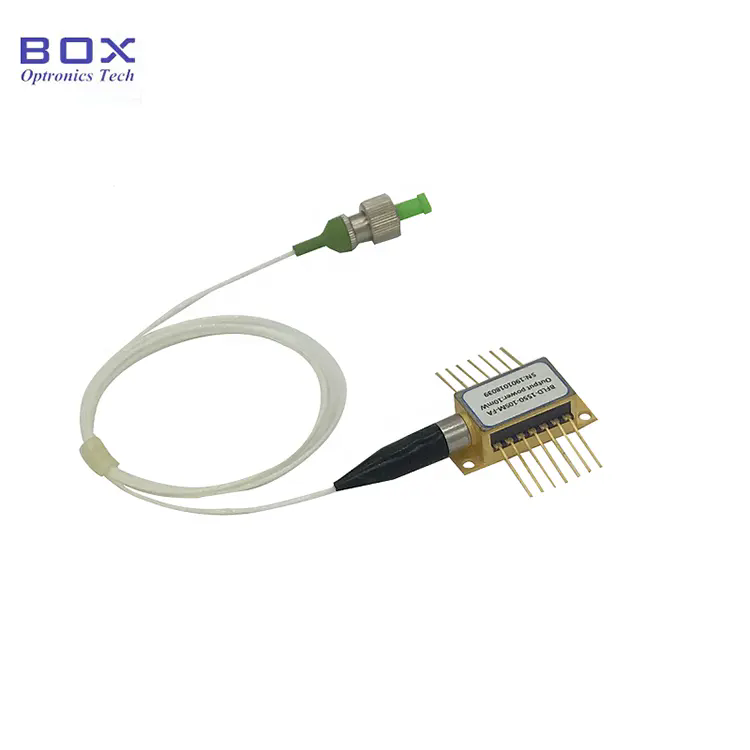
In TDLAS gas sensing systems, the DFB (Distributed Feedback) laser serves as the core light source. DFB lasers are characterized by narrow linewidths, single-longitudinal-mode output, high wavelength stability, and precise tunability. Their emission wavelength can be accurately matched to the target gas's absorption line and fine-tuned via temperature or drive current to enable scanning and detection across the absorption peak, making them an ideal choice for industrial gas monitoring, environmental analysis, and scientific research.


Principles


(1) The DFB laser emits a coherent, single-mode laser beam with a wavelength tuned to the target gas absorption line.

(2) The laser beam passes through a gas cell containing the sample to be measured.

(3) The gas absorbs part of the laser light at its characteristic wavelength, while the remaining light is transmitted.

(4) A photodetector captures the transmitted or reflected light, converting it into an electrical signal.

(5) The system analyzes the signal using lock-in detection, demodulation, or Fourier transform algorithms to calculate gas concentration according totheBeer-Lambert law.


TDLAS Gas Sensing System Block Diagram


Key Component Functions


Component

Function Description

DFB laser

Supplies a narrow-linewidth single-mode laser source. Its emission wavelength is tuned via temperature control to scan across the characteristic absorption line of the target gas, while the injection current is modulated at high frequency for wavelength modulation spectroscopy (WMS) measurements.

Gas Cell

A sealed chamber containing the target gas and providing a defined optical path length for absorption measurement. Optional temperature and pressure control modules improve measurement stability and reduce errors caused by environmental variations.

Photodetector (PD)

Converts the optical signal after interaction with the gas into an electrical signal for subsequent amplification, demodulation, and concentration analysis.

Beam Splitter/Optical Fiber Coupler

Beam splitter matches a free-space optical system, while fiber coupler fits an all-fiber setup. It splits the laser into reference and measurement paths. The reference signal is used to compensate for laser power fluctuations and improve measurement accuracy (optional).

Signal Processing System

Amplifies weak photodetector signals and performs wavelength modulation spectroscopy (WMS) demodulation, including 1f/2f harmonic extraction, to obtain gas absorption information and determine gas concentration.

Computer/ Control System

Provides system control, parameter configuration, data acquisition, signal processing, concentration calculation, data storage, and real-time visualization of measurement results.


Product List (Products We Offer)


760nm 10mW DFB Butterfly Laser Diode

1392nm 10mW DFB Butterfly Laser Diode

1683nm 10mW Fiber Coupled Laser

High-power 1653.7nm 40mW DFB Butterfly Laser

1651nm DFB Fiber Coupled Laser Diode

1625nm DFB BTF Laser Diode

1567nm DFB butterfly laser diode

1580nm DFB SM PM Laser Diode


View the product


FAQ


Q1: What wavelength of DFB laser is typically used in TDLAS?

A1:


Gas

Wavelength(nm)

1

CO2

1572.45

2

O2

760

3

CH4

1653

4

N2O

1392/2257

5

CO

1566

6

NH3

1512.2

7

SO2

7160

8

NO

1800/2650

9

H2S

1574.5/1590

10

C3H8

3370

11

SF6

1576.3

12

C2H2

1531.64/1521

13

C2H4

1625.9

14

C2H6

1683.1

15

HCI

1742

16

HF

1278/1273

17

HCN

1540


Q2: Does the DFB laser require an isolator?

A2: Optical isolators are recommended in fiber-based TDLAS systems or in configurations with significant optical back-reflection. They may also be beneficial in free-space setups where residual reflections exist. The isolator suppresses optical feedback, preventing mode hopping, frequency instability, and output power fluctuations, thereby ensuring stable single-mode laser operation and improved measurement baseline stability.


Q3: Why is the DFB laser the preferred light source for TDLAS instead of FP or VCSEL laser?

A3: DFB lasers, integrated Bragg gratings, provide stable single-frequency, narrow-linewidth emission with high SMSR (>35 dB) and mode-hop-free tuning. In comparison, FP lasers exhibit multi-longitudinal-mode emission and limited wavelength stability, while VCSELs typically offer a constrained tuning range that may not fully cover the required absorption features. The superior spectral purity and tuning stability of DFB lasers significantly improve harmonic detection SNR, making them the preferred light source for high-precision WMS-TDLAS (1f/2f) gas sensing.


Q4: What package options are available for TDLAS DFB lasers?

A4: Two mainstream packages:

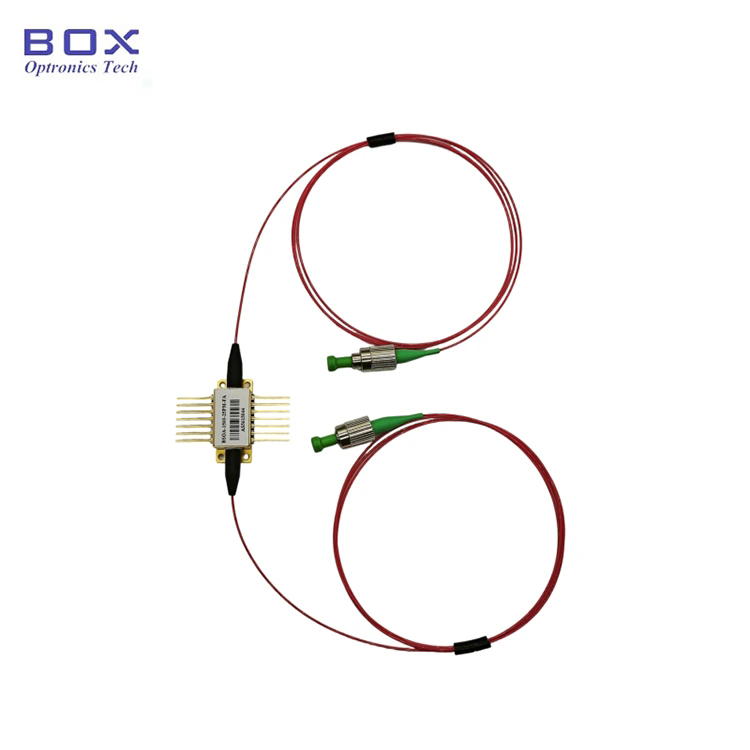
①14-pin Butterfly package: Integrates a TEC, NTC thermistor, and monitor photodiode, with an optional optical isolator. It is widely used in high-precision fiber-coupled TDLAS systems requiring precise temperature and power stabilization.


②TO-can (TO5/TO46): A compact solution designed for free-space or collimated output configurations. It typically lacks integrated TEC control and may require external temperature stabilization. It is suitable for cost-sensitive and miniaturized open-path gas sensing applications.


Next :

-

X
We use cookies to offer you a better browsing experience, analyze site traffic and personalize content. By using this site, you agree to our use of cookies.Privacy Policy
RejectAccept