News

Understanding Semiconductor Lasers — Principles, Performance and Applications

2026-04-07 0 Leave me a message

1. Development history

Semiconductor lasers were invented in 1962 and achieved continuous-wave operation with double heterostructure in 1970, becoming the core light source for optical communication. The InGaAsP/InP system supports the 1300/1550 nm low-loss communication band, and MOCVD has become the mainstream fabrication technology.


2. Fundamental

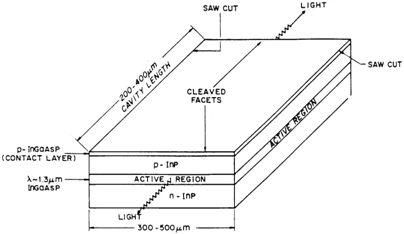
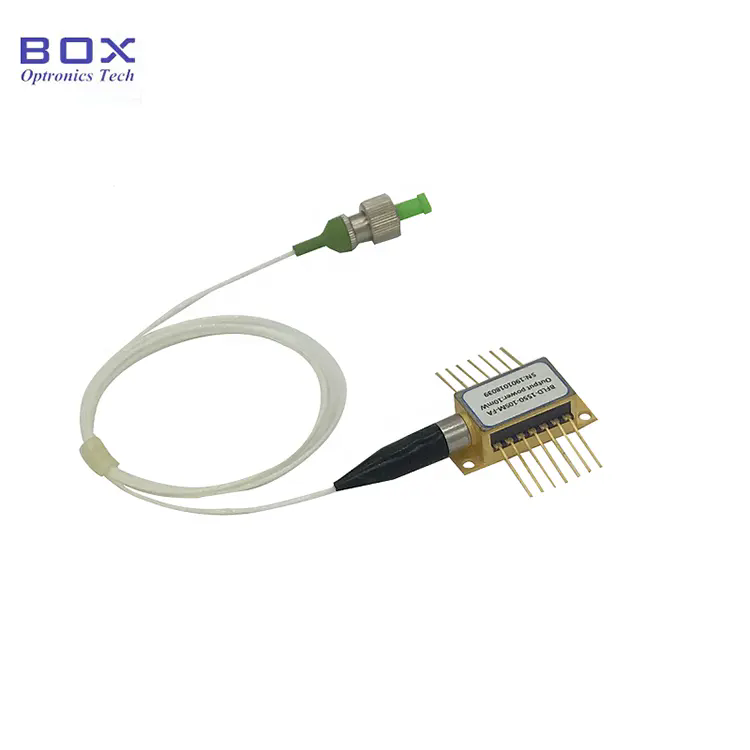
A semiconductor laser consists of a gain medium and a Fabry–Perot resonator. Population inversion is realized by carrier injection, and laser is generated by stimulated emission. The longitudinal mode spacing is determined by the cavity length, and mode locking requires phase synchronization of multiple longitudinal modes


Schematic of a broad area laser


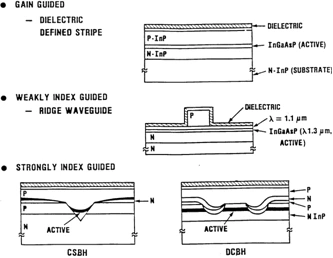
Several laser designs using InGaAsP/InP material system.


3. materials

The InGaAsP/InP material system is adopted for the communication band, covering 1300–1600 nm. MOCVD epitaxial growth achieves high-precision lattice matching, which is the core fabrication scheme for commercial lasers.


4. Key Features

The threshold current increases exponentially with temperature, and the characteristic temperature T₀ reflects temperature stability. High-speed modulation relies on low-capacitance and strong index-guided structures.


5. Application value

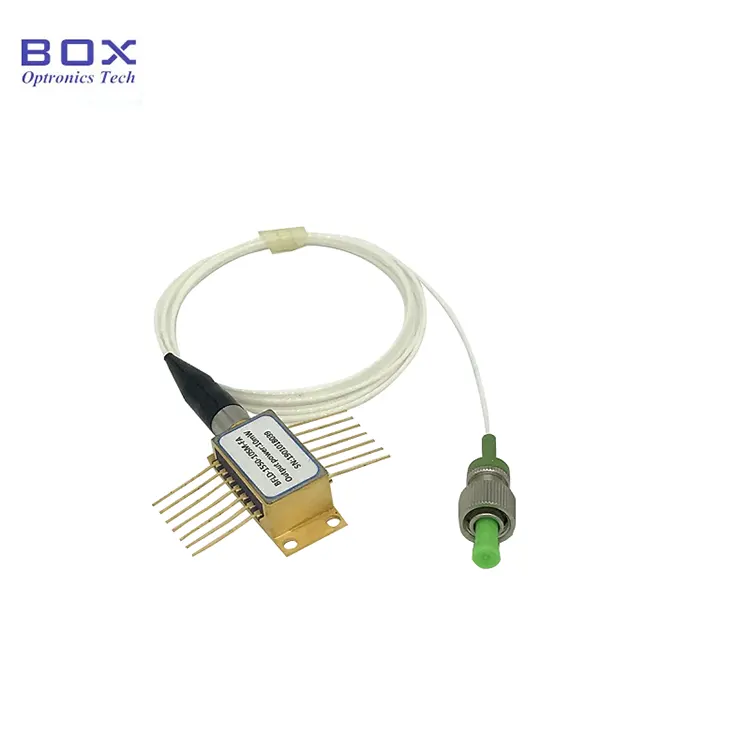
Semiconductor lasers feature small size and high reliability, acting as the core light source for optical communication, pump sources, printing and sensing, supporting miniaturization and integration of ultrafast mode-locked systems.

Related News
Leave me a message
X
We use cookies to offer you a better browsing experience, analyze site traffic and personalize content. By using this site, you agree to our use of cookies. Privacy Policy
Reject Accept